
Projects - The Domes
Ntambu
24827-HQ-LEL (612 Km²)
Ntambu is strategically positioned within the Domes Region of the Zambian Copperbelt, immediately adjacent to the world-class Sentinel Mine and Enterprise Nickel Mine mineral systems. The Sentinel deposit hosts approximately 1Bt @ ~0.5% Cu, while Enterprise contains a globally significant nickel sulphide resource of ~34Mt @ ~1.3% Ni
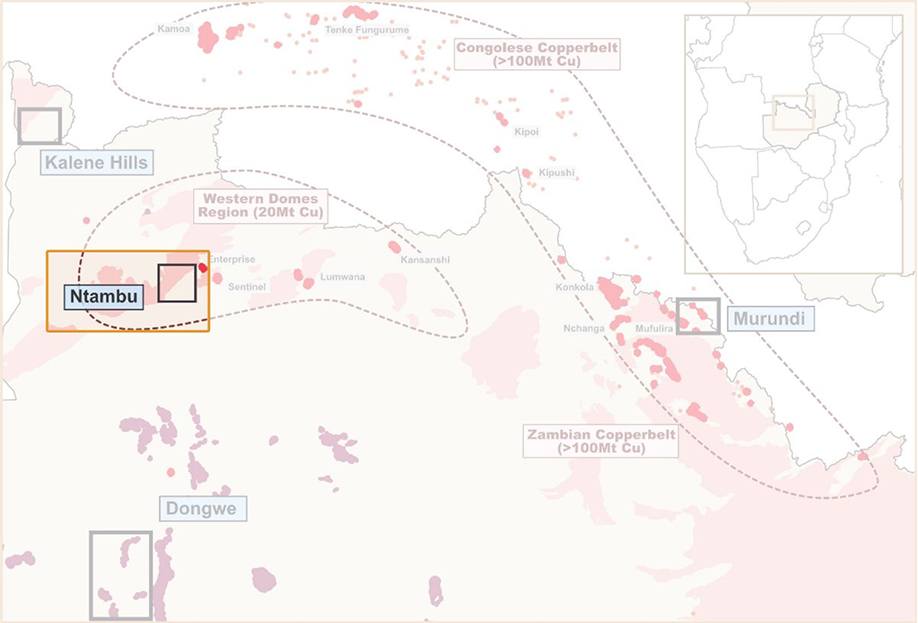
The Ntambu License
In January 2021, First Quantum Minerals Ltd entered into a technical cooperation agreement with Zamare Minerals covering the Ntambu licence. Under the agreement, First Quantum provided Zamare with a substantial exploration dataset including comprehensive soil geochemistry, airborne magnetics, radiometrics, electromagnetic surveys and historical drilling data generated as part of the broader Trident exploration program. Following licence relinquishment by First Quantum, the Ntambu licence remained unencumbered and is now 100% owned by Zamare.
Integration of the geological, geochemical and geophysical datasets has enabled the development of a robust geological model outlining kilometre-scale strike potential along a highly prospective lithological contact associated with the region’s major copper systems. Importantly, this favourable structural and lithological corridor remains entirely untested by drilling, presenting a compelling large-scale discovery opportunity
Integration of the geological, geochemical and geophysical datasets has enabled the development of a robust geological model outlining kilometre-scale strike potential along a highly prospective lithological contact associated with the region’s major copper systems. Importantly, this favourable structural and lithological corridor remains entirely untested by drilling, presenting a compelling large-scale discovery opportunity
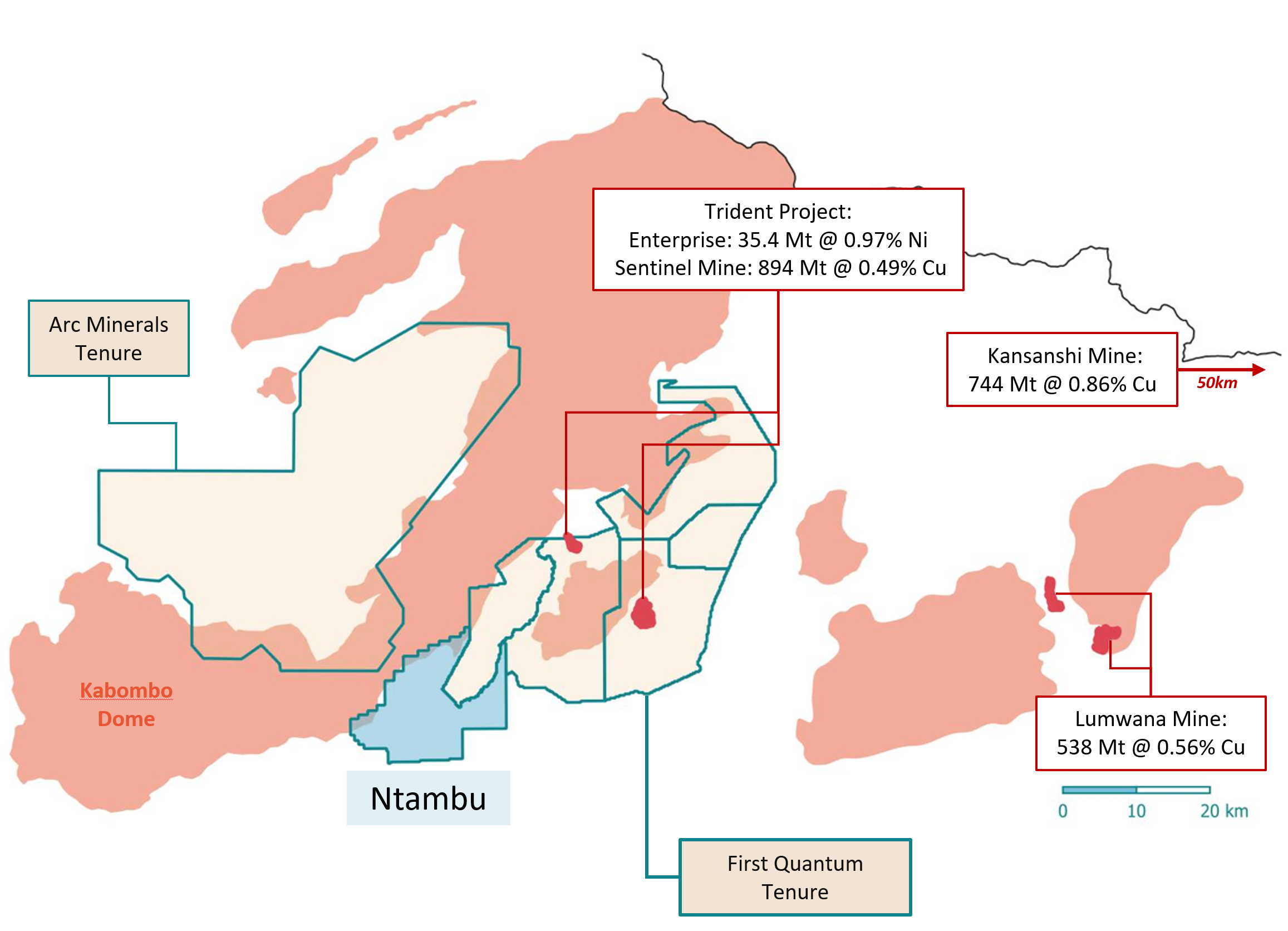
Ntambu licence location on the Kabompo Dome edge (Click to zoom in)
The integrated lithostructural interpretation at Ntambu defines kilometre-scale strike continuity of a northeast-trending regional detachment zone, interpreted to nucleate along a zone of rheological weakness within the Roan carbonate sequence. This carbonate package is positioned stratigraphically above a basal quartzitic unit interpreted to represent the oxidised Lower Roan siliciclastic sequence, which was deposited directly onto basement rocks.
At Ntambu, the interpreted mineral system is developed between the oxidised Lower Roan clastic sequence and the regional detachment associated with the overlying Roan carbonates. The system is expressed as a series of stacked thrust structures propagating from a shallow north-dipping detachment zone. These thrusts appear to link into deeper basement-rooted structures, creating potential fluid pathways capable of transporting copper-bearing mineralising fluids into favourable lithological and structural trap sites.
This structural architecture is considered highly prospective and analogous to major basement dome-hosted copper systems elsewhere in the Domes Region of the Zambian Copperbelt. Importantly, any mineralisation present remains effectively concealed beneath post-mineralisation Kalahari sand cover, locally up to 50m thick, deposited within a Karoo-aged graben basin.
The integration of geology, geochemistry and multi-disciplinary geophysics has resulted in the development of a robust exploration model, with several compelling “walk-up” drill targets now identified for first-pass testing
At Ntambu, the interpreted mineral system is developed between the oxidised Lower Roan clastic sequence and the regional detachment associated with the overlying Roan carbonates. The system is expressed as a series of stacked thrust structures propagating from a shallow north-dipping detachment zone. These thrusts appear to link into deeper basement-rooted structures, creating potential fluid pathways capable of transporting copper-bearing mineralising fluids into favourable lithological and structural trap sites.
This structural architecture is considered highly prospective and analogous to major basement dome-hosted copper systems elsewhere in the Domes Region of the Zambian Copperbelt. Importantly, any mineralisation present remains effectively concealed beneath post-mineralisation Kalahari sand cover, locally up to 50m thick, deposited within a Karoo-aged graben basin.
The integration of geology, geochemistry and multi-disciplinary geophysics has resulted in the development of a robust exploration model, with several compelling “walk-up” drill targets now identified for first-pass testing
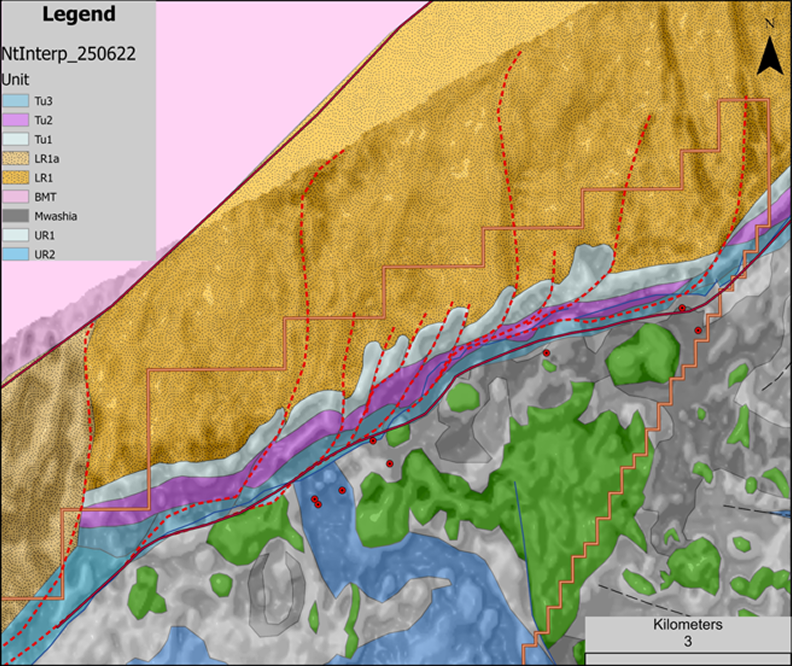
Ntambu lithostructural geological interpretation developed through the integration of airborne magnetics, electromagnetic (EM) datasets and ground Audio Magnetotelluric (AMT) geophysics, defining prospective basement architecture, structural corridors and favourable lithological contacts concealed beneath Kalahari sand cover.
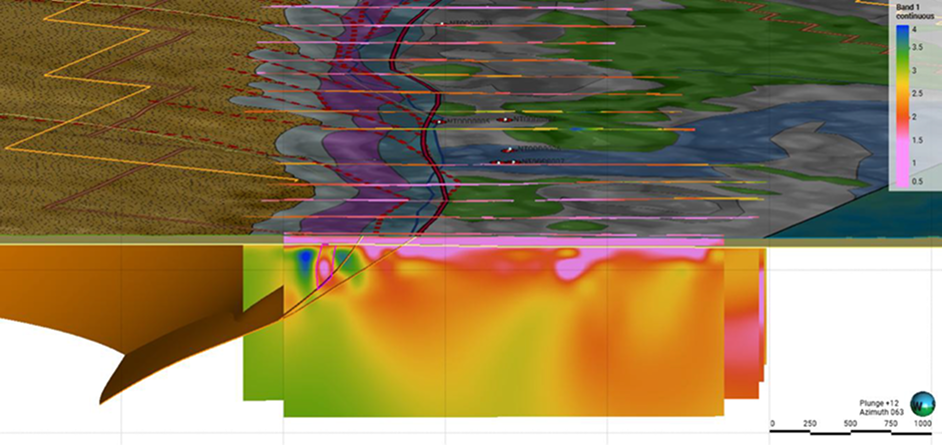
Cross section through Ntambu AMT profiles highlighting a modelled shallow north-dipping thrust structure. This interpreted structural architecture is considered analogous to the nearby Sentinel Mine deposit, where mineralisation is associated with a prominent north-dipping thrust system and host carbonaceous phyllites developed within a north-plunging overturned recumbent fold sequence.
Get in touch with us
Reach out for any inquiries, support, or to discuss how we can meet your mining needs.
