
Projects - Central NW IOCG
Dongwe
25521-HQ-LEL, 22562-HQ-LEL, 27909-HQ-LEL, & 38335-HQ-LEL
The Dongwe project consists of 4 contiguous tenements which are all 100% owned by Zamare and totals 427.5 km²
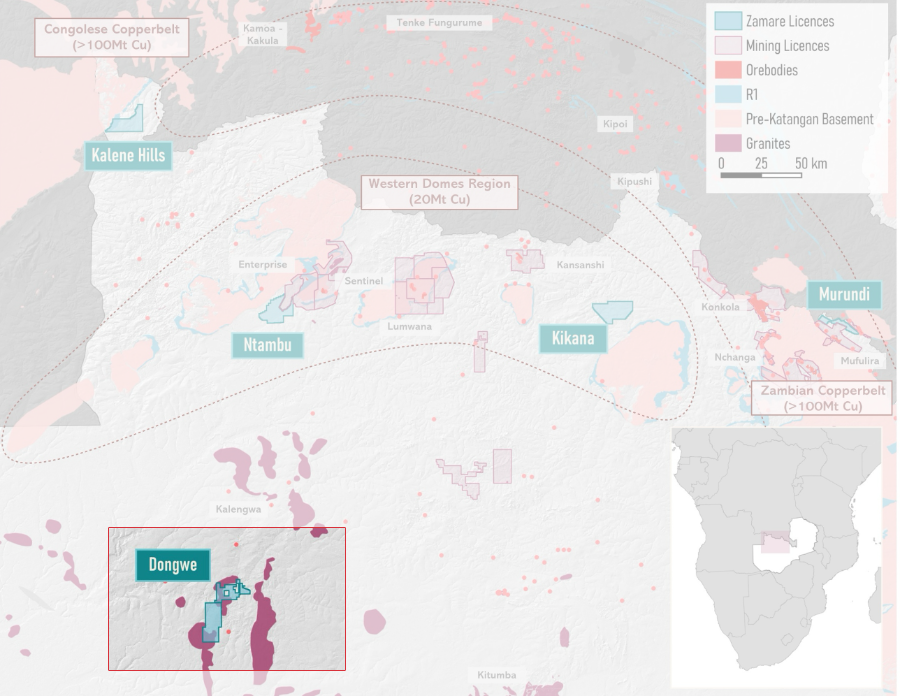
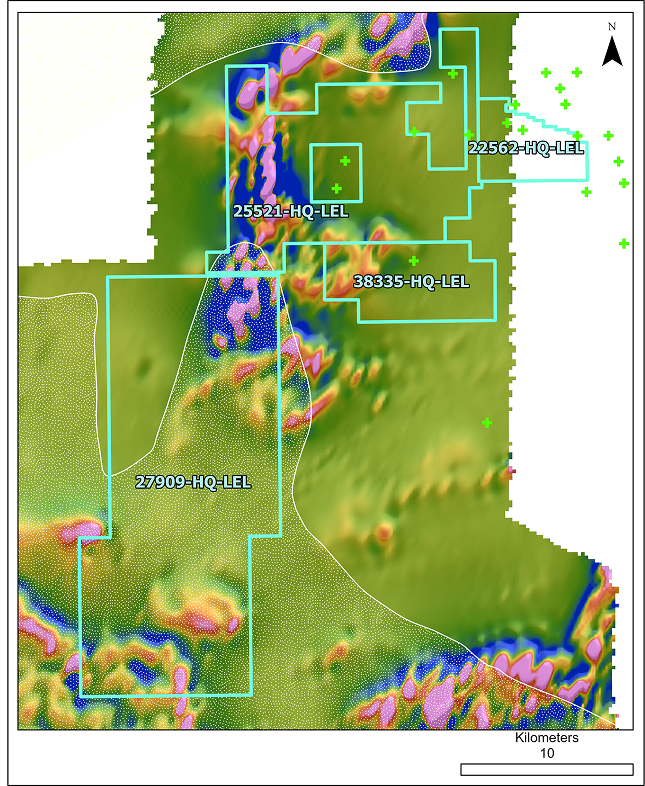
The Dongwe Project is located within Zambia’s emerging Hook Granite IOCG province, an underexplored but highly prospective region for large-scale copper and critical mineral discoveries. The project is situated within a district-scale structural corridor associated with intrusive granites, extensive hydrothermal alteration and large magnetic-gravity anomalies interpreted to represent Iron Oxide Copper Gold (IOCG) mineral systems.
Regional exploration by BHP using Falcon gravity and aeromagnetic surveys led to the discovery of the Kitumba Copper Deposit, which hosts 27.9 Mt @ 2.3% Cu and demonstrates the potential for large concealed copper systems beneath shallow cover within the Hook Granite terrain.
Dongwe shares several key characteristics with major IOCG systems, including widespread magnetite alteration, structurally controlled hydrothermal activity, copper anomalism and multielement pathfinder geochemistry including Ni, Co, Mo, Bi ± Au, alongside elevated rare earth element values. Initial work indicates the presence of a large-scale evolving magmatic-hydrothermal mineral system with potential for both broad alteration halos and higher-grade structurally focused mineralisation.
The project is also located approximately 45 km south of the historic Kalengwa Copper Mine, historically regarded as one of Zambia’s highest-grade copper mines, further highlighting the strong copper endowment of the region.
Regional exploration by BHP using Falcon gravity and aeromagnetic surveys led to the discovery of the Kitumba Copper Deposit, which hosts 27.9 Mt @ 2.3% Cu and demonstrates the potential for large concealed copper systems beneath shallow cover within the Hook Granite terrain.
Dongwe shares several key characteristics with major IOCG systems, including widespread magnetite alteration, structurally controlled hydrothermal activity, copper anomalism and multielement pathfinder geochemistry including Ni, Co, Mo, Bi ± Au, alongside elevated rare earth element values. Initial work indicates the presence of a large-scale evolving magmatic-hydrothermal mineral system with potential for both broad alteration halos and higher-grade structurally focused mineralisation.
The project is also located approximately 45 km south of the historic Kalengwa Copper Mine, historically regarded as one of Zambia’s highest-grade copper mines, further highlighting the strong copper endowment of the region.
Exploration at Dongwe
Prior to drilling, Zamare Minerals completed a systematic district-scale exploration program across the Dongwe Project focused on identifying large concealed IOCG targets. This included the acquisition and reinterpretation of BHP’s Falcon gravity and aeromagnetic datasets, integration of historic exploration data, and completion of a ~9,000 sample soil geochemistry program across the licence area.
The program successfully outlined multiple copper anomalies spatially associated with large coincident magnetic and gravity features, leading to the definition of three priority IOCG targets: Dongwe Central, Kambimba and Msanza.
Follow-up field mapping identified widespread hydrothermal alteration, brecciation and structurally controlled mineralisation within the surrounding country rocks, further strengthening the IOCG exploration model. Msanza, the standout target, was subsequently advanced with detailed ground magnetic surveys to refine drill targeting ahead of the maiden drilling program that would deliver the project’s first significant mineralised intersection.
The program successfully outlined multiple copper anomalies spatially associated with large coincident magnetic and gravity features, leading to the definition of three priority IOCG targets: Dongwe Central, Kambimba and Msanza.
Follow-up field mapping identified widespread hydrothermal alteration, brecciation and structurally controlled mineralisation within the surrounding country rocks, further strengthening the IOCG exploration model. Msanza, the standout target, was subsequently advanced with detailed ground magnetic surveys to refine drill targeting ahead of the maiden drilling program that would deliver the project’s first significant mineralised intersection.
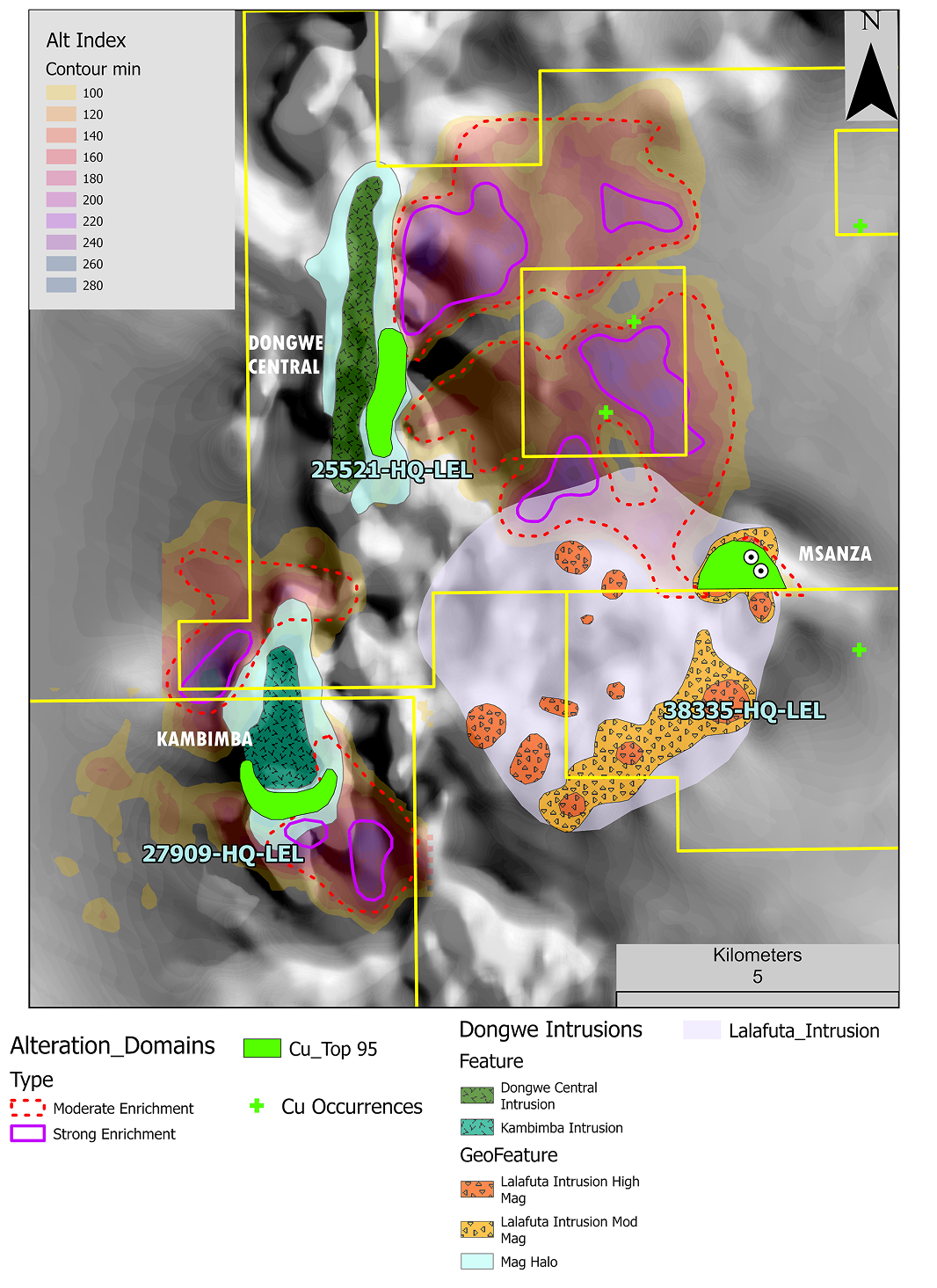
Dongwe simplified geology with location of copper anomalies and multi-element alteration index contour map.
2024 Drill Program
In 2024, Zamare completed its maiden diamond drilling program at the Msanza Prospect, one of the priority targets identified during the exploration program. The first drill hole intersected a massive brecciated and strongly altered system, consistent with the style of alteration commonly associated with IOCG mineralisation. The second drill hole (MSZDD002) intersected copper mineralisation of up to 0.3% Cu, together with significant rare earth element mineralisation including 49 m grading 1.06% TREO. The hole was unfortunately terminated prematurely due to drilling difficulties while still within the mineralised zone.
Importantly, the highest TREO grades occur at the bottom of the hole, associated with an intense skarn-style alteration zone, and the mineralisation remains open at depth and along strike. The presence of copper, cobalt and rare earth element mineralisation within a large iron-rich hydrothermal system strongly supports the interpretation that Msanza represents part of a fertile magmatic–hydrothermal IOCG system.
Importantly, the highest TREO grades occur at the bottom of the hole, associated with an intense skarn-style alteration zone, and the mineralisation remains open at depth and along strike. The presence of copper, cobalt and rare earth element mineralisation within a large iron-rich hydrothermal system strongly supports the interpretation that Msanza represents part of a fertile magmatic–hydrothermal IOCG system.
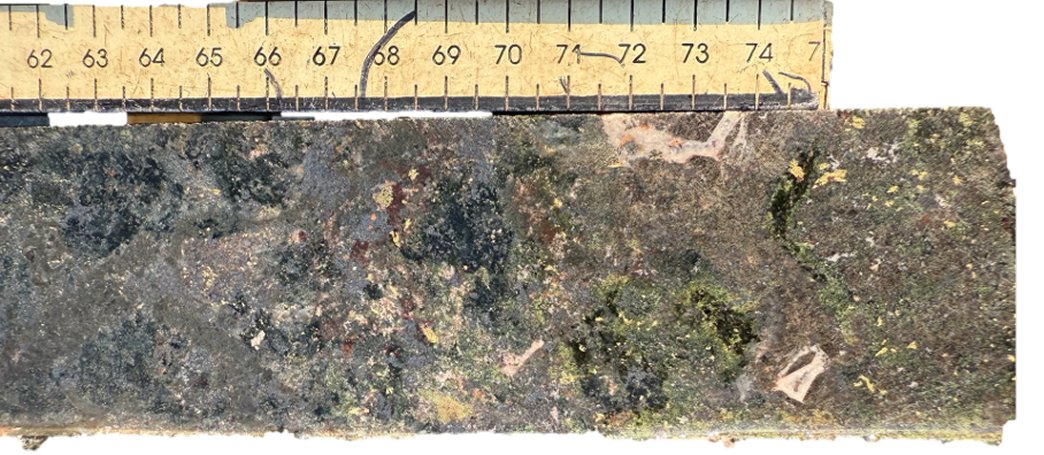
MD1_002 170m
Magnetite, chlorite, epidote (py) skarn assemblage at bottom of hole.
Discovery Potential
Maiden drilling at the Dongwe Project confirmed the presence of a large-scale IOCG-style magmatic-hydrothermal system at the Msanza target. Initial drilling intersected extensive hydrothermal brecciation, strong magnetite alteration and widespread sulphide mineralisation within altered Katangan sediments, together with elevated copper and multielement pathfinder geochemistry including Ni, Co, Mo, Bi ± Au and REEs.
Importantly, the system displays clear evidence of evolving hydrothermal fluid activity and metal remobilisation, with broad allanite-associated REE alteration overprinted by later-stage retrograde fluorocarbonate mineralisation . Toward the end of hole MSZDD002, drilling intersected a strongly altered magnetite–chlorite–epidote skarn-like assemblage associated with significantly elevated REE grades and dominant by fluorocarbonate mineralisation in the form of synchysite.
The scale of alteration, intensity of hydrothermal overprint and presence of pathfinder metal assemblages are considered highly encouraging indicators of a fertile copper-bearing IOCG system, with the current drilling interpreted to represent the outer preserved halo of a potentially larger Cu-dominant magmatic-hydrothermal centre at depth.
Importantly, the system displays clear evidence of evolving hydrothermal fluid activity and metal remobilisation, with broad allanite-associated REE alteration overprinted by later-stage retrograde fluorocarbonate mineralisation . Toward the end of hole MSZDD002, drilling intersected a strongly altered magnetite–chlorite–epidote skarn-like assemblage associated with significantly elevated REE grades and dominant by fluorocarbonate mineralisation in the form of synchysite.
The scale of alteration, intensity of hydrothermal overprint and presence of pathfinder metal assemblages are considered highly encouraging indicators of a fertile copper-bearing IOCG system, with the current drilling interpreted to represent the outer preserved halo of a potentially larger Cu-dominant magmatic-hydrothermal centre at depth.
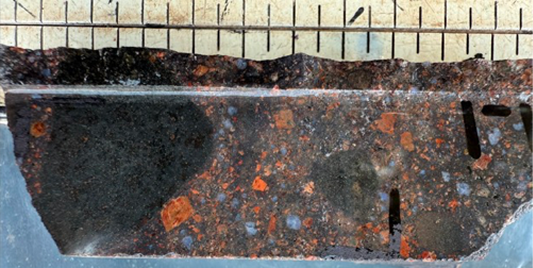
MD1_001 145.10-145.15
Hydrothermal breccia, qtz feldspar-phyric with luminescent blue quartz. Large (3-7cm chloritized siltstone clasts with tiny titanite disseminations. Fine grained aphanitic ground mass resembling porphyritic textures.
Well rounded clasts of host rock siltstone entrained in breccia.
Well rounded clasts of host rock siltstone entrained in breccia.
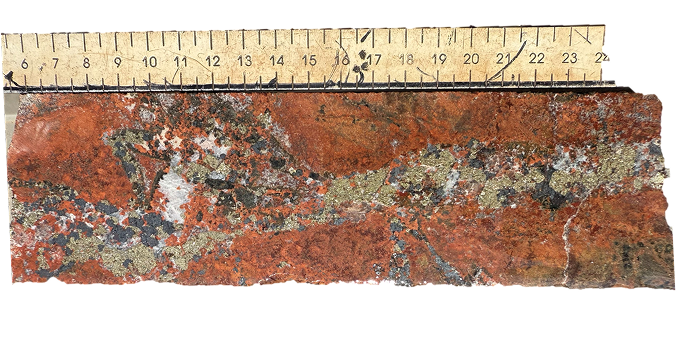
MD2_001 145.10-145.15
Potassic altered metasediments with pyrite, magnetite, cp assemblage.
Get in touch with us
Reach out for any inquiries, support, or to discuss how we can meet your mining needs.
